

Autopilot

When Systems Optimize for the Wrong Outcome
I drove down to San Francisco and back a few months ago with two neighbors. The 23-year-old in our group did the driving because his Tesla had free Supercharging, which made him the obvious volunteer. On the way home, we stopped at a Supercharger about a third of the way back to Sacramento. As we pulled out and headed for the freeway, I glanced at the navigation screen and saw the route it had laid out for us — south on 680. Exactly the wrong way to go.
I yelled at him to go the other way, toward the Benicia Bridge and the most direct route home. He looked confused, asked if I was sure, then complied. As it turned out, buried in his GPS preferences was a little switch labeled avoid tolls. It had probably been there for months. It had been working perfectly the whole time, avoiding non-existent tolls around town. Nobody had reason to notice. The route was always plausible. The car was always competent. And on this particular afternoon, that one quiet setting was about to add 48 miles and almost an hour to our drive home, all to save eight dollars at the toll booth.
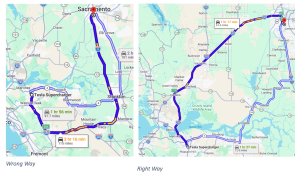
He’s a smart kid. The car is a smart car. The GPS is a sophisticated piece of software. And all three of them, working in perfect concert, were about to take us an hour out of our way — because nobody had stopped to ask what the system was actually optimizing for. Everything was on autopilot.
The stock market feels the same way.
Market Conditions Reflecting “Autopilot” Behavior
Risk, as measured by the CBOE Volatility Index, is asleep. The VIX is sitting in the high teens with the S&P 500 making fresh all-time highs above 7,200. Bank of America described the recent melt-up as an upside crash — a rally so steady and so persistent that it has the structural characteristics of its opposite. Anyone alive who navigated a true secular bear market is now a senior citizen. The portfolio managers running money today have spent their entire careers in a single regime: long-duration assets win, dips get bought, the Fed shows up. A whole generation of drivers has only ever known cruise control.
Passive Investing Flows and Market Structure Trends
The flows are on rails too. Recent academic work suggests passive investors now own roughly a third of the U.S. stock market — roughly double the figure that gets quoted casually. A growing share of daily trading volume executes in the closing auction, because that is structurally where index funds have to trade to minimize tracking error. A meaningful chunk of the daily push higher is no longer anyone making a decision about value; it is 401(k) contributions hitting on the 15th and 30th of the month and being deployed mechanically, weighted toward whatever is biggest. Which means more goes to whatever has gone up the most. The feedback loop runs itself. Nobody is at the wheel.
Concentration Risk Within Broad Market Indexes
And underneath all of that, concentration is at extremes. The ten largest names in the S&P are something like a third of the index. The Magnificent Seven alone drove most of the returns of the last two years. If you own “the market” through a broad-based index fund — which most Americans do, and which is generally sensible advice — your exposure to a handful of AI-adjacent megacaps is far higher than you probably realize. Your setting says track the market. The market itself has quietly become a concentrated bet on a single thesis. Is autopilot taking you where you want to go?
Portfolio “Settings” and Investor Behavior
Here is where the metaphor earns its keep. The Tesla wasn’t broken. The GPS wasn’t broken. They were doing exactly what they had been told to do. The problem was that nobody had checked the settings against the actual situation.
Investor portfolios have settings too, and most of them are quite reasonable. Avoid taxes, so we never rebalance out of the winners. Avoid fees, so many default to the cap-weighted index regardless of what’s in it. Avoid regret, so we never sell anything that’s still going up. Avoid friction, so we let the contribution algorithm keep buying whatever it’s been buying. Each of those was chosen for a good reason at the time it was chosen. And each of them, in the right environment, can route you 48 miles out of your way without you noticing — because the system isn’t failing. It’s optimizing for the wrong thing.
What an “Autopilot Market” May Indicate
That, I think, is what an autopilot market actually is. Not a market that’s about to crash. Not a market that demands you sell everything and hold cash. Just a market in which an unusual number of decisions are being made by no one in particular, on settings that were configured for a different trip.
The Importance of Reviewing Investment Assumptions
The fix in the Tesla wasn’t to throw out the GPS or to stop trusting the car. The fix was that one of the passengers had driven that stretch of road enough times to recognize the route was suboptimal, and to say so out loud at the right moment. That’s the whole job, in the end — not to abandon the system, because for most people, most of the time, the system is the right default. The job is to be the guy who occasionally looks up from his phone, checks the route against the territory, and asks the question nobody else thought to ask: what is this thing actually optimizing for, and is that still what I want?
Check your settings.
Advisors Capital Management, LLC is an investment advisor registered with the United States Securities and Exchange Commission. Registration does not imply any degree of skill or training. All investing carries risk, including the potential for the loss of principal and past performance is no guarantee of future results. This content is for informational purposes only, can change at any time without notice, and is not investment advice or a recommendation to trade any security. Indices are not available for direct investment. We only provide services in jurisdictions where we are registered. Our disclosure brochure (ADV Part 2A) and customer relationship summary (ADV Part 3) are available at https://adviserinfo.sec.gov and upon request.


