

Estate Planning for Digital Assets

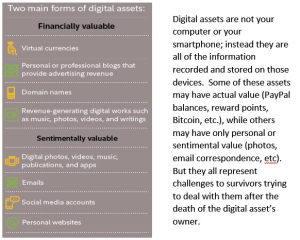
Over time and, having been accelerated as a result of the COIVD-19 pandemic (remember that?), more of us are living more of our lives online. In addition to email and social media accounts, it’s become the norm to store financial records on smartphones, computers, or in the cloud and to conduct financial transactions electronically.
Why Digital Assets Should Be Included in Your Estate Plan
As a result, accounting for our digital assets should be part of the execution and preparation of our estate plans. If not, then your heirs may not be able to access them (family photos may be lost forever, social media accounts could stay open online long after you’ve passed, and your heirs may not receive all of the money that you’d like to leave to them).
Challenges of Accessing Digital Assets After Death
Digital assets can be passed on to designated parties like other kinds of property. But gaining access to them can present challenges for anyone other than the original owner. Passwords are the first obstacle (your family members can’t access your phone or computer or online accounts without them) and there are criminal and data privacy laws to understand as well.
At the state and federal level, there are laws that prohibit unauthorized access to your devices and private personal data. These protect consumers against fraud and identify theft, but they can also prevent family members from gaining access to the digital assets of a deceased loved one. For this reason, make sure that your estate plan authorizes your fiduciaries/beneficiaries/heirs to access your digital data.
Understanding Data Privacy Laws and Digital Account Access
Data privacy laws prohibit online account service providers from disclosing the electronic communications of the owner of that data without the owner’s consent. Resolving access issues with providers such as Apple, Facebook, Verizon, or Google after the fact may be complex and could present challenges for your heirs. What you need to do now is understand the “terms of service’ for your email and social media accounts and, like the rest of your estate planning, take steps to prepare in advance. Here are some examples:
- Google’s Inactive Account Manager (myaccount.google.com/data-privacy) allows you to designate up to 10 trusted contacts to access your Google data (Gmail, Photos, Drive) if your account becomes inactive
- An Apple Legacy Contact is a trusted person chosen to access a user’s iCloud data—photos, messages, notes, and files—after their death. The contact will need a generated access key and a death certificate to gain access
- Facebook’s Memorialization Settings allows users to plan their digital legacy and offer two options: appointing a Legacy Contact or opting for account deletion after death.
- Amazon accounts and access cannot be passed on after death, however family members can request to close the deceased’s account, which makes sense to prevent any unauthorized purchases, by emailing a copy of a death certificate directly to Amazon.
And so on…
Practical Steps to Organize and Protect Your Digital Assets
Where to start?
First, make a list of your digital assets, including user names and passwords and make sure that your trusted family members know how to find/access it.
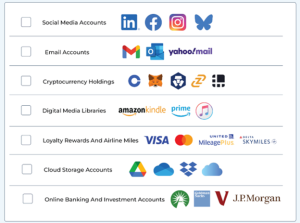
Second, back up any data you’ve stored in the cloud. This means saving it on a local computer or storage device (like a portable/removable hard drive). This not only includes your photos, but also important documents such as account statements, birth certificates, wills, tax returns and insurance policies. Check your social media accounts too. Facebook, for example, has a One-Click Download option to download all of your data to a computer and, while not financially valuable, that information may be really valuable to your heirs for other reasons.
Updating Legal Documents to Include Digital Asset Access
Third, provide consent in your legal documents. You may need to update your will and power of attorney if they are old and you didn’t consider this issue the last time you executed them. And make sure that they you grant your fiduciaries with the ability to reset or recover your passwords as needed (time may have passed between the last time you logged in and they eventually do). Also, you may not want to make all of your digital assets accessible to all of your fiduciaries so this is where you can designate exactly who can see what.
Communicating Your Estate Plan with Family and Fiduciaries
Fourth, communicate your plans. If you’ve read our comments on essential estate planning documents over the years and kept up, then that’s great, but can your designated power-of-attorney/agent/surrogate log into all of your accounts if something were to happen to you? Your bills will still need to paid. It kind of defeats the point of having all of your documents prepared and skipping this part of the planning. If you care about making life easier for your family at a time when it really matters, then take 5-10 minutes to have a conversation and make sure that they know where to find everything and how to get logged in. Or ask your ACM Wealth Advisor for our “Beyond the Documents” checklist with action steps that will help to create peace of mind for you and your family.
The Growing Importance of Digital Estate Planning
Estate planning requires effort, organization and documentation, but it’s less about taxes and more about communicating the details of how we live our lives day-to-day and how to access our “stuff”. As more of our routine moves online, the issue of planning for our digital assets is also becoming more routine. For now, taking the steps above may provide you with some comfort and make life easier for your loved ones when the time comes.
If you have any questions or want to discuss, then as always, please reach out to your ACM Wealth Advisor.
Advisors Capital Management, LLC is an investment advisor registered with the United States Securities and Exchange Commission. Registration does not imply any degree of skill or training. All investing carries risk, including the potential for the loss of principal and past performance is no guarantee of future results. This content is for informational purposes only, can change at any time without notice, and is not investment advice or a recommendation to trade any security. Indices are not available for direct investment. We only provide services in jurisdictions where we are registered. Our disclosure brochure (ADV Part 2A) and customer relationship summary (ADV Part 3) are available at https://adviserinfo.sec.gov and upon request.


